Saratoga Seed Company


https://saratogaseed.com , 6 Cygnet Circle, Saratoga Springs, NY 12866 (518)290-0305.

Unusual, Rare, Wild and Heirloom plants for your Home and Garden

Saturday, June 4, 2011

Wild Strawberry, Fragaria vesca

Want an easy, rewarding plant to grow? How about a plant with the best tasting strawberries you've ever tried?  There's a reason that fine restaurants and gourmands the world over seek this berry- it's truly better than any mega-farm strawberry grown. Berries are small, sweet, and everbearing.

Commonly called the Woodland or Alpine Strawberry, this variety is Fragaria vesca.

These perennial plants reproduce by seed and stolons.  Zones 4-7 work best. Plant in full sun to partial shade.  Prefers well draining, slightly acidic soil.  Amend sandy and clay soils with organic compost or mulch.  Currently in stock and shipping in our Amazon and Etsy stores.


Karlington at Etsy.com
Saratoga Seed on Amazon.com

Thursday, May 5, 2011

Living Herbal Tea Kit

Bee balm, Feverfew and Peppermint. Make your own specialty teas from the dried leaves and flowers of these three living herbs! Each makes a delicious tea with its own merits and there are purported health benefits as well:

Bee Balm Tea: A hot or cold infusion makes a soothing beverage. Historically used for the symptom relief of colds, headaches, and gastric disorders, soothing sore throats, nausea.

Feverfew Tea: Similar to chamomile, feverfew sooths the pain of migraine headaches, reduces fevers and the pain of arthritis.

Peppermint Tea: Various healing effects, as a result of the menthol that it contains. It is said to ease such problems as irritable bowel syndrome, nausea, and headaches.

Ideas: Don't forget iced teas this time of year. Bee balm and peppermint added to a pitcher of plain iced tea will make great memories. Peppermint is also useful in Mediterranean dishes, candies, drink recipes and desserts.

Well established plants, 8-12 inches tall, are shipped bareroot for transplanting in your garden or container. These are all perennial plants, as they will come back year after year.

Growing and brewing instructions provided!  Currently shipping in my Etsy store..

Saturday, April 2, 2011

Pink Lily of the Valley

Blooming now in the gardens are Convallaria majalis, common name: Lily of the Valley.  Other names for the flower are, "Our Lady's Tears" or "May Lily". Not a true lily, but it plays the part well!   Of all the plants in our gardens, this flower is my favorite. Such a beautiful flower and unforgettable fragrance. We know that Lily of the Valley is native to Europe, but there is disagreement on whether it is native to North America.  Some interesting cultivars exist, such C. albiostrata, a white blooming plant with variegated foliage.  There is the pink blooming variety, C. majalis var. rosea, as well as a white blooming type with doubled flowers.

We've grown the white, pink and variegated varieties here.  In our garden setting, it is the pink Lily of the Valley that exceeds the other varieties in naturalization, root mass, stem diameter and plant height.

Tuesday, December 14, 2010

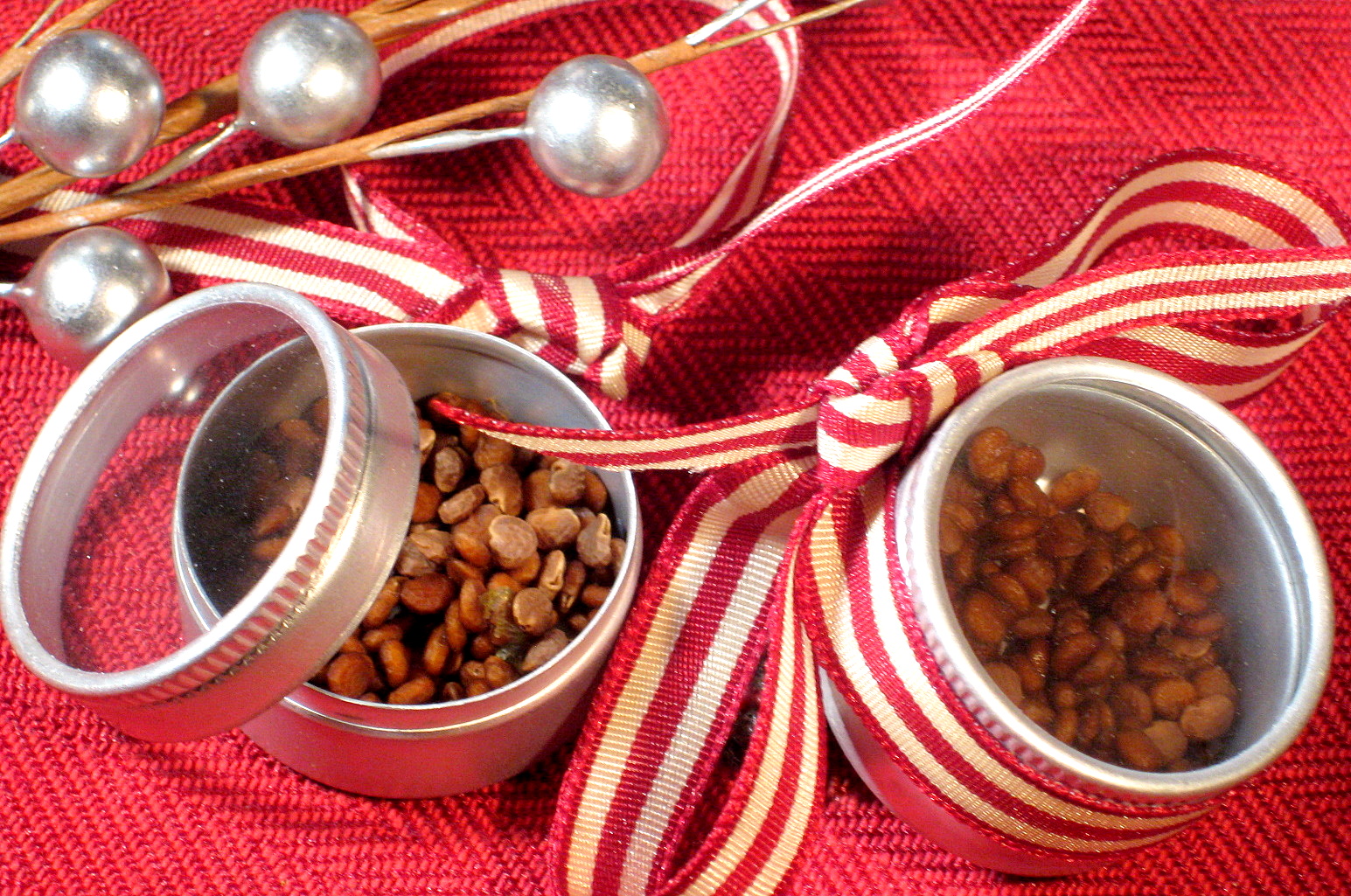
Great Last Minute Gift Idea! Angel's Trumpet Seeds for the Gardener

100+ Angel's Trumpet Seeds (Datura: Le Fleur Lilac), packaged in a unique ribbon-wrapped aluminum and glass case.  (no longer for sale)

Ready to gift! Includes species information and planting instructions.

This plant grows tall and wide and has simply the most beautiful, multiple 3-4 inch lavender flowers with an outstanding fragrance. Plant near your home or garden entrance to be greeted by its wonderful fragrance.

This variety of Datura is easily grown and is an outstanding specimen plant for the garden. We grow these seeds from our own plants in Upstate NY from plants that reseed themselves each season.

For most of the U.S. and Canada, this plant is a fast growing Annual. In warmer climates, such as south Florida, Datura will grow year-round.

Height:
36-48 in. (90-120 cm)
Spacing:
18-24 in. (45-60 cm)
Hardiness:
Treat as an annual outside or bring potted plant inside during winter.

Sun Exposure:
Full Sun
Sun to Partial Shade

Danger:
Like many plants, do not ingest seeds or any parts of Datura or Brugmansia

Bloom Color:
Violet/Lavender

Bloom Time:
Late Spring/Early Summer
Mid Summer
Late Summer/Early Fall

Foliage:
Dark green

Soil pH requirements:
6.6 to 7.5
Propagation Methods:
From seed; direct sow outdoors in fall
From cuttings; root branch cuttings made during growing season

Seed Collecting:
Bag seedheads to capture ripening seed
Allow seedheads to dry on plants; remove and collect seeds
Properly cleaned, seed can be successfully stored


Sunday, July 11, 2010

Saratoga Secret Garden Tour, July 11, 2010

Sunday, July 11- The Saratoga County Soroptimist chapter puts on a "Secret Garden Tour" each year.  It's a great way to get behind the scenes of some homes that you've admired and compare their gardening skills (or their gardener!) to your own.  This year, one of the public gardens included Yaddo, the artists' retreat near the grandest entrance to Saratoga Springs. The rose garden looked very well kept and was a reminder to me that I will never be able to keep up with a formal style garden.  As for the private gardens, one could see that the current trend of inside/out living was in play as several homes had very comfortable outdoor furniture to enable  the enjoyment of their gardens.  I did see a couple of varietals of ligularia, some jack-in-the-pulpit, ginger, solomon's seal, and false solomon's seal.
Most of the gardens had water features and mostly were well done, very impressive.  The most amazing one ran as a stream from the top of a hillside, splashing and crashing into a very nice pool at the bottom.  In short, I recommend this tour to get some plant and garden ideas, as well as some ideas to spruce up your castle.  See you next year!

Thursday, May 20, 2010

Japanese Larch, Larix kaempferi

We have a large tamarack larch, Larix laricina, at the end of one of our gardens. It's about 80 feet tall and straight as an arrow. Larch are deciduous conifers, meaning they shed their needle-like leaves in the Fall and start anew in Spring.

The Japanese Larch is a fine specimen tree for your landscape or garden project. The tree has 4 seasons of interest: Winter's bare branches and open cones, Spring's chartreuse new needles and purple cones, Summer's blue/green needle color, and finally, Fall's spectacular gold/bronze coloration. The tree can reach 80 feet and about 1.5 feet diameter at the base of the trunk.

Saturday, April 3, 2010

False Sea Onion

(Ornithogalum caudatum)Also known as Pregnant Onion is a very interesting easy to grow plant native of South Africa. Not really an onion, the plant starts with a bulb that grows on top of the ground. Long, ribbon-like leaves will grow forth from the top of the bulb, eventually arching back toward the ground. The bulb will reach up to 4 inches (10 cm) in diameter. The strap-like leaves are semi-succulent and will grow up to 36 inches (1 m) in length. It is an easy plant to grow and it is well suited for containers. Blooming Time: The small white flowers with a green stripe usually flower from May to August. There may be as many as 50 to 100 flowers per stalk. Culture: Ornithogalum caudatum are easy to culture. They need light shade to full sun with a well-drained soil. In the greenhouse, we use a soil mix consisting of 1 part peat to 1 part loam to 2 parts sand. The plants are allowed to dry slightly in-between waterings. If the plants are allowed to dry too much, they will go dormant. In Zones 4-8, this plant would be good to bring outside on the shaded deck or patio for the late Spring and Summer months. Use caution here: if nights will be down into the mid 30's, bring them back inside. In the winter, you will see the bulb go into a dormant state. You can store the bulbs in a dark, cool basement until Spring or just let them be. Propagation: Ornithogalum caudatum is propagated from bulbils that are formed on the sides of the main bulb or by seed.